Author: Yardley

  • Signs Your Atlanta Sprinkler System Needs Repair

    If parts of your Atlanta lawn stay dry while others puddle, sprinkler heads no longer pop up, you see wet spots around a head or valve box, or the system never ran right again after winter, the issue is often a repair — a broken head, a leak, a zone valve, or a line — not just a new watering schedule.

    Atlanta Professional Landscaping installs and repairs irrigation systems for homes and commercial properties in Metro Atlanta north of I-20. We handle repairs for our maintenance and irrigation service clients and as part of installations and upgrades, including systems we didn’t originally install; we don’t take one-off, repair-only calls. Below are the signs we look for, what usually causes them here, and when it is time to request a visit. For new systems or system types, see our irrigation services page.

    Common signs a sprinkler system needs repair

    • Dry or brown patches in one zone while nearby turf looks fine. That often points to a clogged or broken head, a head that is stuck down, or a zone that is not opening all the way.
    • Heads that do not pop up, or spray in a weak mist. Low pressure can come from a leak on the same zone, a cracked pipe, a partly closed valve, or a pump or backflow issue.
    • Geysers, puddles, or sinking soil around a head, valve box or along a trench line. Those are typical leak signs. On clay soil, water may surface a few feet away from the actual break.
    • A zone that will not turn on, or will not shut off. That is often a valve, a wiring problem at the controller, or a valve stuck open.
    • The controller runs, but little or no water comes out after a freeze or a long winter shutdown. Lines, heads or the backflow preventer may have been damaged by cold weather.
    • You have to add more and more time to keep the lawn green, or the spray pattern no longer reaches where it used to. Heads wear out, settle, or get knocked off-aim by mowers and foot traffic.

    Seasonal inspections, adjustments and spring start-ups are a different visit from a repair diagnosis. They are part of our irrigation service for ongoing clients.

    Why these problems show up in Metro Atlanta

    North of I-20, three site conditions come up again and again. Georgia clay shifts and holds water, so fittings and shallow laterals can loosen or break as the ground moves. Winter freezes, even short ones, can crack backflow preventers, exposed pipes and heads that were not drained or blown out. And busy yards — kids, pets, lawn care — knock rotors and spray heads out of alignment or break them off at the riser.

    None of those means every dry spot is a broken system. A controller that is set for the wrong season, a head buried in growing turf, or a zone that was never aimed at a new planting bed can look like a repair issue. A short walk-through is the way to tell the difference.

    What we check on a repair visit

    On a typical visit we run each zone, look at coverage and pressure, inspect heads, valve boxes and the backflow preventer, and look for leaks along the lines. If a repair is straightforward — a head, a nozzle, a riser, a visible leak — we can usually explain that on the spot and quote the work. If a line is broken under a walk or patio, or a valve needs replacement, we will walk through the options and the written scope before any larger work starts.

    We do not quote irrigation repair from a photo alone when the leak or the failed zone is not obvious, because the fix depends on what we find when the system is running.

    Repair or a larger update?

    Repair is usually the right path when the system is generally well laid out and only a zone, a few heads or a leak has failed. A larger update may be worth discussing if the yard has changed — a new patio, a sod area, or beds that the original system no longer covers — or if several zones have the same pressure or coverage problem. That decision should wait until someone has seen the system run. We recommend a full replacement only when repairs no longer make sense for the system.

    Request an irrigation visit

    We serve Metro Atlanta north of I-20, including Smyrna, Marietta, Roswell, Sandy Springs and nearby communities. If you are a maintenance or irrigation service client, call 770-434-0933 Monday through Friday, 8 AM to 5 PM, or use the contact page to request a time for us to look at the system. Not a client yet? Repairs are available as part of a maintenance plan or alongside a new system or upgrade; start on our irrigation service page.
  • When a French Drain Helps a Wet Atlanta Yard

    A French drain is often the right fix when the same part of an Atlanta yard stays wet after rain, especially on Georgia clay north of I-20, and shorter steps like extending a downspout or adding soil have not moved the water away from the house, patio or driveway.

    Atlanta Professional Landscaping designs and installs drainage, including French drains, for homes and commercial properties in Metro Atlanta north of I-20. This guide explains when a French drain is a good fit, how it works in clay soil, and when another drainage approach may be a better first step. If you already know you need help, contact us or see our French drain and yard drainage pages.

    What a French drain does

    A French drain is a sloped trench with a perforated pipe in a bed of gravel, usually wrapped so soil does not clog the stone. Water in the surrounding soil moves into the gravel, enters the pipe, and is carried to a lower, safer outlet — for example a lower part of the yard, a daylit opening, or another approved discharge point on the property.

    It is not a pump. It is a way to collect water that is already in the ground or moving across the surface and give it a clear path out.

    Signs a French drain may be the right next step

    A wet yard does not always need a French drain. These patterns, though, are the ones we see most often on properties north of I-20 when a drain is worth considering:

    • Water stands for more than a day after rain in the same low spot, side yard or near a downspout outlet.
    • Turf or beds stay soft and muddy long after the rest of the yard has dried.
    • Mulch, soil or gravel keeps washing toward a foundation, walk or driveway.
    • A patio, walk or basement-adjacent wall shows dampness after storms, and the grade around it is already fairly flat.
    • You have already extended downspouts and the water still collects in the same place.

    A simple check: after a typical rain, walk the yard and note where water sits, where it flows, and whether it heads toward the house. Photos and a rough sketch help a lot when we walk the property with you.

    Why Atlanta clay changes the decision

    Much of Metro Atlanta sits on red clay that holds water and drains slowly. A yard that feels fine in a dry stretch can turn soggy once fall and winter rains arrive and plants are using less water. Clay also means a drain has to be sloped and outlet correctly — a trench without a real place for the water to go will not solve the problem.

    That is why we do not quote a French drain from photos alone. The layout depends on the high and low points of your lot, existing downspouts, hardscapes, and where water can be released without sending it onto a neighbor or back toward the house.

    French drain, regrading, or a dry creek bed?

    These options often work together. They are not competing products so much as different tools:

    • Regrading reshapes the surface so water runs away from the house. It is often the first move when the soil currently slopes toward a foundation or patio.
    • A dry creek bed is a visible, stone-lined channel for water that already flows across the surface, such as from downspouts or a hillside.
    • A French drain is usually the better fit when water is sitting in the soil or in a low area that cannot be graded steeply enough, and you need to move that water underground to a lower outlet.

    On some lots, the right plan is a short surface channel that feeds a French drain, or a drain that protects a patio or retaining wall. The choice should follow how water actually moves on your property, not a one-size layout.

    What to expect from a site visit

    When we look at drainage in Marietta, Smyrna, Roswell, Sandy Springs and the rest of our service area north of I-20, we walk the property, talk through the wet spots you have noticed, and look at grade, downspouts, hardscape and a safe outlet. You then get a written scope and price for the work that fits that yard. We do not use a single standard price for French drains, because length, depth, outlets and access change the job.

    If you are still in the “is this even a drainage problem?” stage, start with our earlier guide, Atlanta Yard Drainage: Signs of Trouble Before Winter Rains, then request a visit when you want a plan for your lot.

    Request a drainage estimate

    Atlanta Professional Landscaping serves Metro Atlanta north of I-20. Call 770-434-0933 Monday through Friday, 8 AM to 5 PM, or send a request through our contact page. We will schedule a time to walk the property and follow up with a written scope.

  • Landscape Lighting for Atlanta’s Long Winter Evenings

    Landscape Lighting for Atlanta’s Long Winter Evenings

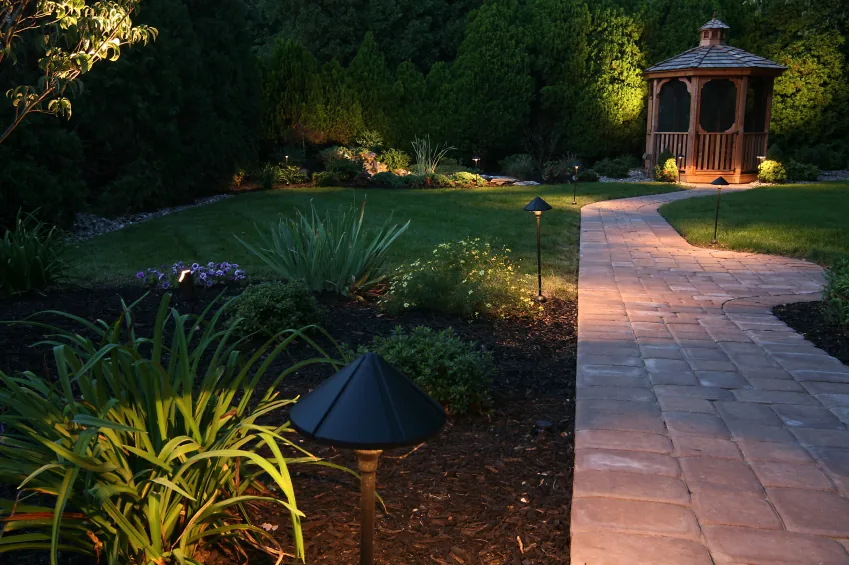
    The best time to add landscape lighting in Atlanta is right now, when the clocks have fallen back and it’s dark before most of us get home. Good lighting makes your paths and steps safer, helps your home feel more secure, and lets you keep using your patio on cool fall and winter evenings. A low-voltage system on a timer handles all of it without you thinking about it.

    We hear the same thing every November: “I didn’t realize how dark the yard was until I was carrying groceries up the steps with my phone flashlight.” Here’s how to tell what your yard needs, where lights make the biggest difference, and what to think about before you start.

    Why does landscape lighting matter more in late fall and winter?

    Once daylight saving time ends, a lot of your time at home happens after dark. That’s when you’re pulling into the driveway, walking the dog, or taking out the trash. Without good light, steps, edges and tree roots become easy places to trip.

    It’s also when your yard is hardest to enjoy. A patio or fire pit you loved in October can sit unused until spring simply because you can’t see out there. A few well-placed fixtures change that.

    Where does lighting make the biggest difference?

    Walk your property one evening after dark. Notice where you hesitate, where you reach for a flashlight, and what you wish you could see from inside. Most homes come back to the same few areas:

    • Paths and walkways. Soft, low lights along the edges show you where to step without glaring in your eyes.
    • Steps and walls. Lights set into or along retaining walls and stair risers mark each level clearly.
    • The front of the house. Uplighting on the facade and entry makes your home easy to find and feel welcoming.
    • Trees and plantings. A light aimed up into a mature tree or across a planting bed gives the yard depth at night.
    • Patios and outdoor living spaces. Light around a paver patio or fire pit turns it into a space you can actually use after sunset.

    How do you plan a lighting layout that looks natural?

    The goal is to light the way people move through the property and the things you want to see, not to flood the whole yard. More fixtures isn’t always better. A yard lit like a parking lot loses the warm, layered look most people want.

    When we plan landscape lighting, we start with a walk of the property. We look at how you come and go, where the steps and grade changes are, and which trees, beds and stonework are worth showing off. Then we place fixtures around that. If you’re also planning hardscape or planting work, it helps to plan the lighting at the same time so wiring can go in before the patio or beds are finished.

    What should you know about low-voltage systems and timers?

    Most residential landscape lighting is low-voltage. It runs from a transformer that steps down your home’s power, so the wiring along beds and paths is lower voltage than a standard outlet. Pair it with a timer and the lights come on in the evening and shut off later at night on their own.

    That matters in winter. As the days get shorter and then start to lengthen again, a timer you can adjust keeps the lights in step with the season. You don’t have to remember to flip a switch.

    Does landscape lighting need care over time?

    Yes, a little. Plants grow, and a fixture that lit a young shrub perfectly may be buried a couple of years later. Mulch and leaves can cover path lights, and a mower or a busy dog can knock a fixture out of line. A quick check each season, plus adjustments as your plantings fill in, keeps the system looking the way it did the night it was finished.

    Frequently asked questions

    Is fall a good time to install landscape lighting in Atlanta?

    Yes. Fall and early winter are when you notice the dark the most, and the ground is usually workable on dry days. It’s also a good time to see exactly where your yard feels too dark, since you’re out there after sunset more often.

    Can lighting be added to an existing patio or retaining wall?

    Often, yes. Many fixtures can be added along the edges of an existing patio, walkway or wall. Some options, like lights built into the wall itself, are easier to install while the wall is being built. We’ll look at what you have and talk through what makes sense.

    Will landscape lighting help with security?

    Lighting the entry, driveway, paths and dark corners near the house makes it easier to see who’s coming and going. It’s one helpful piece of keeping your home feeling safer at night, along with whatever else you already have in place.

    How much does landscape lighting cost?

    It depends on the size of the property, site conditions and the fixtures you choose. We quote after walking the property with you, so the estimate reflects your actual yard.

    Do you serve my area?

    We work across Metro Atlanta north of I-20. You can see the towns and neighborhoods we serve on our service areas page.

    Ready to see your yard in a new light?

    If your steps are hard to see or your patio goes unused once the sun sets, let’s walk your property together and plan lighting that fits the way you live. Request your estimate and a member of our team will be in touch.

  • Atlanta Yard Drainage: Signs of Trouble Before Winter Rains

    Your yard probably has a drainage problem if water stands for more than a day after rain, the same spots stay soggy for weeks, or soil and mulch keep washing toward your house or driveway. The best time to find out is now, in the fall, so you can deal with it before cool weather keeps the ground soaked.

    Here in north-metro Atlanta, Georgia red clay makes this a common issue. Clay holds water and drains slowly. A yard that seems fine all summer can turn into a mud pit once the rain settles in and the plants stop drinking it up. Here’s what to look for, a simple test, and what to do next.

    Why does fall matter for yard drainage?

    In summer, heat and growing plants pull a lot of water out of the soil. In late fall and winter, that slows down. Grass goes dormant, leaves drop, and the sun is lower. Rain that would have dried up in July can sit for days in January.

    Fall is also when it’s easiest to see what’s going on. Beds are cut back, leaves are piling into gutters, and you still have dry days to work. Work goes easier in a dry spell than in wet clay.

    What are the warning signs of poor drainage?

    Walk your yard a day or two after a good rain. Look for these signs:

    • Puddles that hang around. A puddle that lasts for hours is normal. One that’s still there the next day is telling you something.
    • Soggy turf that squishes underfoot. Moss, thin grass, or bare mud in the same spot year after year often means that area never fully dries out.
    • Yellowing or struggling shrubs. Plants sitting in wet clay can get root rot, sometimes called “wet feet.” The leaves can look like the plant needs fertilizer when it really needs less water.
    • Washouts and erosion. Mulch on the sidewalk, bare channels cut through a bed, or red clay stains across the driveway show where water is running fast.
    • Water near the foundation. Damp spots in a crawl space or basement, or soil sloping toward the house, are worth a closer look.
    • Downspouts that dump right at the house. If a downspout empties onto a splash block next to the wall, that water often has nowhere good to go.

    Where is the water coming from?

    Most drainage problems start with one of a few sources: the roof, a hard surface like a driveway or patio, a neighbor’s yard uphill, or a low spot with nowhere to drain. Watch your yard while it’s raining, not just after. Follow the water from where it lands to where it ends up. That one walk tells you more than anything else.

    How can you test your soil’s drainage at home?

    The University of Georgia Extension suggests a simple hole test. Dig a hole about a foot deep in the problem area and fill it with water. If the water drains within 24 hours, drainage there is probably fine. If water is still standing, that spot has poor drainage. You can read more in UGA’s guide to drainage problems in the landscape.

    Try it in the soggy spot and in a healthy part of the yard so you can compare.

    What can you do before winter rains arrive?

    Some fixes are easy weekend jobs. Others need a plan and the right equipment. Start with these:

    • Clean the gutters. Fall leaves clog them fast. When gutters overflow, water spills right along the foundation.
    • Check where each downspout ends. Water should be carried away from the house, not left to pool at the wall.
    • Keep beds and mulch from sloping toward the house. Over time, mulch and soil build up and can steer water the wrong way.
    • Check your irrigation. If a soggy spot is next to a sprinkler head, a broken head or a schedule that runs too long may be part of the problem. Cut back watering as the weather cools.
    • Clear drains and outlets. If you already have yard drains or pop-up outlets, make sure leaves and grass clippings aren’t blocking them.

    When is it time to call a professional?

    If water keeps coming back to the same place, or it’s heading toward your foundation, a quick fix usually won’t hold. That’s when we walk the property, find the source, and plan a fix for the cause rather than the symptom. Depending on the yard, that might mean grading, downspout routing, a dry creek bed, or erosion control. You can see what’s involved on our drainage solutions page.

    For wet spots that never dry, a French drain is often a good answer. It’s a gravel-filled trench with perforated pipe that collects water underground and carries it to a safe outlet. Learn more about how we approach French drains.

    Frequently asked questions

    Is standing water after a heavy storm always a problem?

    Not always. Some standing water right after a big storm is normal, especially in clay. It becomes a concern when the same spots stay wet for a day or more, or when water is moving toward your home.

    Can I wait until spring to fix a drainage problem?

    You can, but water problems usually grow with every rain. Erosion gets deeper, and wet clay is harder to work. Looking at it in the fall gives you time to plan before winter.

    Do you work on drainage across north-metro Atlanta?

    Yes. We serve homes and commercial properties in Atlanta, Alpharetta, Brookhaven, Buckhead, Dunwoody, Kennesaw, Marietta, Milton, Roswell, Sandy Springs, Smyrna, and Vinings.

    Ready to get your yard ready for winter?

    If you’re seeing any of these signs, we’d be glad to take a look. We’ll walk your property with you, show you where the water is going, and talk through your options. Request your estimate and a member of our team will be in touch.

We use cookies to run this site and, with your OK, to understand how visitors use it. See our Privacy Policy.